Heart disease is one of the leading causes of death worldwide, yet many people overlook its earliest symptoms until a medical emergency occurs. While chest pain is a well-known sign, heart disease often begins with subtle changes that are easy to dismiss as fatigue, stress, or aging. Recognizing these warning signs early can help prevent serious complications such as a heart attack, heart failure, or stroke.
At Sarabsukh Hospital, our experienced cardiology team believes that early diagnosis saves lives. If you notice persistent or unusual symptoms, consulting a heart doctor in Batala without delay can make a significant difference in your treatment and recovery.
Key Takeaways
- Chest discomfort is not the only sign of heart disease.
- Unusual fatigue and breathlessness are common early symptoms.
- Pain can spread to the jaw, neck, shoulders, or arms.
- Swelling in the legs may indicate heart failure.
- Persistent palpitations require medical evaluation.
- Early diagnosis significantly improves treatment outcomes.
- Individuals with diabetes, high blood pressure, or high cholesterol should undergo regular heart screenings.
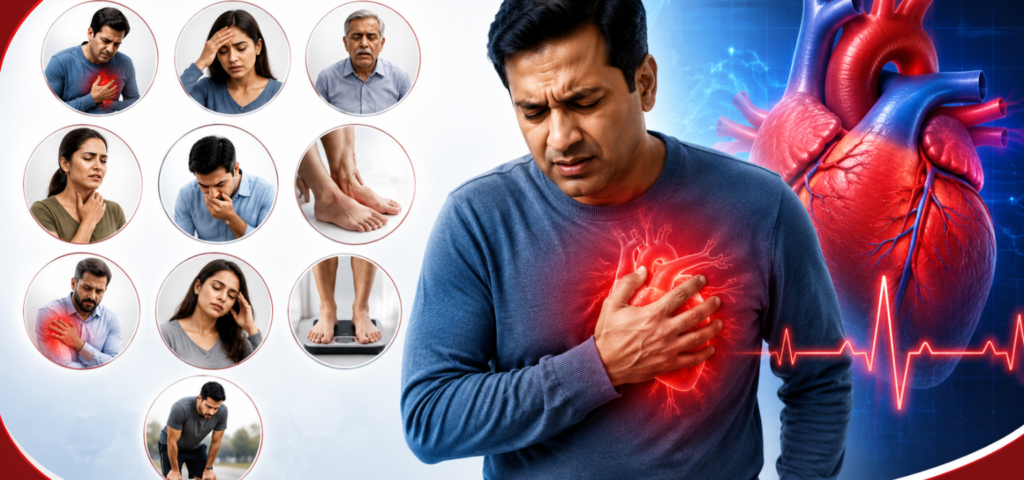
10 Early Signs of Heart Disease You Should Know
Chest Pain or Chest Discomfort
Chest pain is the most recognized symptom of heart disease. However, it doesn’t always feel like intense pain.
Many people describe it as:
- Tightness
- Pressure
- Burning
- Heaviness
- Squeezing sensation
The discomfort may last for a few minutes or come and go.
Chest pain during physical activity or emotional stress is particularly concerning because it may indicate reduced blood flow to the heart (angina).
Never ignore persistent chest discomfort, especially if it radiates to other parts of the body.
Shortness of Breath
Difficulty breathing can be an early indicator that your heart is struggling to pump blood efficiently.
You may notice breathlessness:
- While walking
- Climbing stairs
- During exercise
- While lying flat
- Even during routine household activities
If everyday tasks suddenly leave you unusually breathless, your heart should be evaluated.
Shortness of breath is often one of the earliest warning signs of heart disease, particularly in older adults.
Unusual Fatigue
Everyone feels tired occasionally. However, persistent fatigue without an obvious reason can signal reduced blood flow caused by heart disease.
People often notice:
- Constant exhaustion
- Reduced stamina
- Feeling drained after simple activities
- Needing frequent rest
Women, in particular, commonly report unexplained fatigue before a heart attack.
If your energy levels have significantly changed without explanation, don’t assume it’s simply due to age or stress.
Pain That Spreads Beyond the Chest
Heart-related pain doesn’t always stay in the chest.
It may spread to:
- Left arm
- Both arms
- Shoulders
- Neck
- Jaw
- Upper back
Some people experience only jaw pain or shoulder discomfort without chest pain.
Because these symptoms resemble muscle strain or dental problems, many patients delay seeking medical attention.
Persistent or recurring pain in these areas should always be evaluated.
Irregular Heartbeat or Palpitations
Occasional skipped beats are common and usually harmless.
However, frequent palpitations accompanied by dizziness, chest discomfort, or shortness of breath may indicate an underlying heart condition.
Symptoms include:
- Racing heartbeat
- Fluttering sensation
- Pounding heartbeat
- Skipped beats
Irregular heart rhythms may increase the risk of stroke or heart failure if left untreated.
Early evaluation can identify conditions such as atrial fibrillation or other rhythm disorders.
Dizziness or Fainting
Feeling dizzy occasionally may result from dehydration or low blood sugar. However, repeated dizziness, lightheadedness, or fainting can indicate that your heart is not pumping enough blood to your brain.
You should seek immediate medical attention if dizziness occurs along with chest pain, breathlessness, or palpitations.
Swelling in the Legs, Ankles, or Feet
When the heart cannot pump blood effectively, fluid begins to accumulate in different parts of the body.
Common symptoms include:
- Swollen ankles
- Puffy feet
- Leg swelling
- Tight shoes by evening
- Weight gain due to fluid retention
This may be an early sign of heart failure and should never be ignored.
Cold Sweats Without Physical Activity
Sudden, excessive sweating without exercise or hot weather can be a warning sign of reduced blood flow to the heart.
People often describe it as:
- Cold clammy skin
- Unexpected sweating
- Feeling weak and sweaty
When accompanied by chest discomfort or nausea, this may signal a heart attack and requires emergency care.
Nausea, Indigestion, or Stomach Discomfort
Heart disease doesn’t always present with classic chest pain.
Some individuals—especially women and older adults—experience symptoms such as:
- Nausea
- Vomiting
- Indigestion
- Heartburn-like discomfort
- Upper abdominal pain
Because these symptoms resemble digestive issues, they are often overlooked.
If digestive discomfort occurs with other heart-related symptoms, consult a doctor promptly.
Reduced Ability to Perform Daily Activities
One of the earliest signs of heart disease is noticing that activities you once performed easily now seem exhausting.
You may struggle with:
- Walking short distances
- Climbing stairs
- Carrying groceries
- Household chores
A gradual decline in physical endurance should never be ignored, particularly if accompanied by fatigue or breathlessness.
Conclusion
Recognizing the Early Warning Signs of Heart Disease can help prevent serious complications and even save lives. Symptoms like chest pain, shortness of breath, unusual fatigue, dizziness, or an irregular heartbeat should never be ignored. Early diagnosis and timely treatment are essential for maintaining good heart health.
At Sarabsukh Hospital, our experienced cardiology team provides comprehensive heart care, from preventive screenings to advanced treatment. If you’re experiencing any early signs of heart disease, consult a trusted heart doctor in Batala or Heart specialist without delay. Taking action early is the best way to protect your heart and enjoy a healthier future.